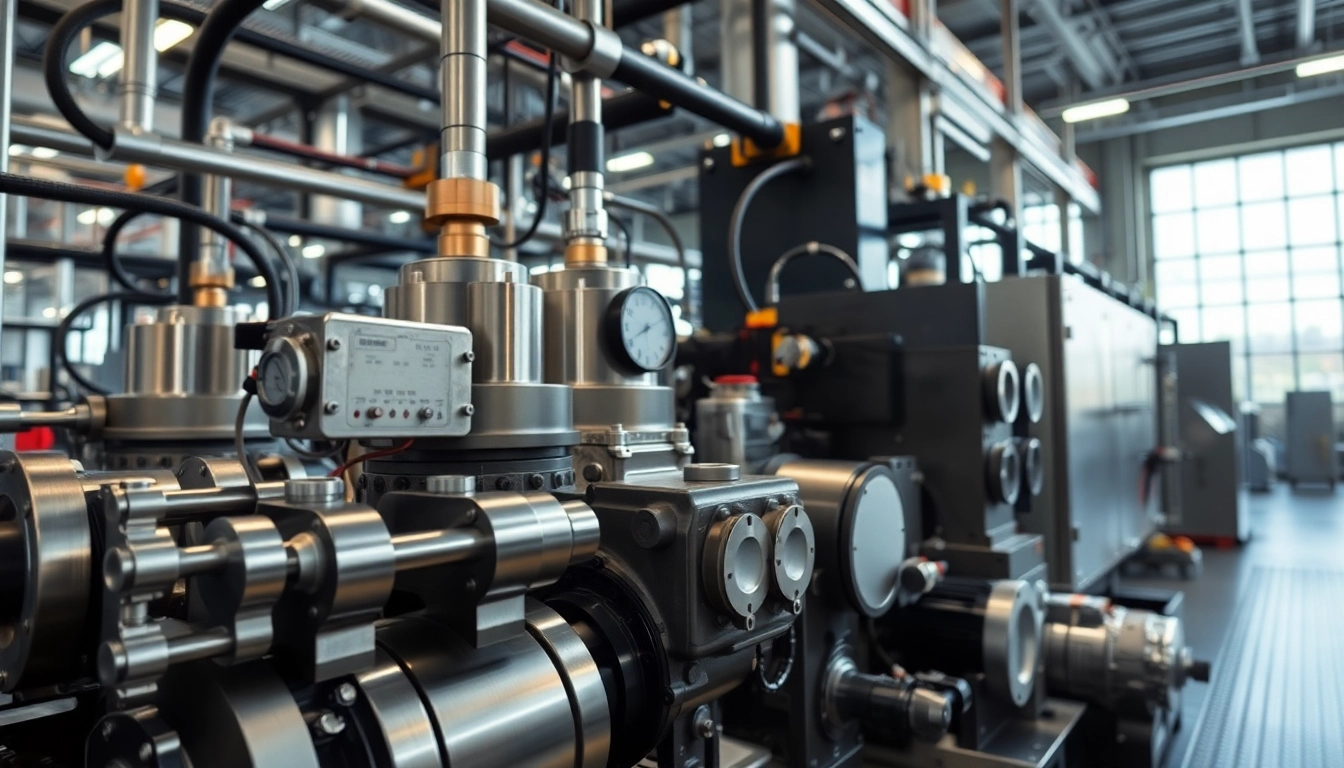
Introduction to Fluid Power Systems
Fluid power systems harness the power of fluids, typically hydraulic oils, to generate, control, and transmit energy. As a fundamental technology employed in various industrial applications, understanding fluid power systems is critical for engineers and professionals alike. From construction machinery to industrial manufacturing, these systems play a pivotal role in enhancing operational efficiency and automation. Exploring fluid power systems provides insights into their components, workings, and significance in the modern economy.
What are Fluid Power Systems?
Fluid power systems are systems that utilize pressurized fluids to transmit power. These fluids, generally liquids or gases, can move mechanical parts through the principles of hydraulics or pneumatics. In hydraulic systems, incompressible fluids are used primarily, while pneumatic systems utilize compressible gases. The adaptability and efficiency of these systems make them integral to various sectors, including agriculture, aerospace, and manufacturing.
Working Principles of Fluid Power
The working principles of fluid power systems revolve around Pascal’s Law, which states that pressure applied to a confined fluid equates to pressure exerted uniformly in all directions. This law governs the operation of hydraulic and pneumatic circuits, facilitating the transformation of energy into mechanical work. Fluid power systems operate through components like pumps, actuators, and valves, allowing precise control over machinery and processes.
Importance in Modern Industry
Fluid power systems are indispensable in modern industry, providing high power-to-weight ratios and unparalleled efficiency. They allow for rapid and precise movement, making them ideal for equipment such as forklifts, automated assembly lines, and robotic arms. Furthermore, fluid power is fundamental in applications requiring high force within compact spaces, showcasing adaptability in design and functionality.
Main Components of Fluid Power Systems
The functionality of fluid power systems hinges on several key components. Each component plays a distinct role in generating and controlling power through fluids, and understanding these can enhance system design and troubleshooting.
Hydraulic Pumps and Their Types
Hydraulic pumps are essential for converting mechanical energy into hydraulic energy by moving pressurized fluid through the system. There are several types of hydraulic pumps:
- Gear Pumps: Simple and cost-effective, ideal for low to moderate pressure applications.
- Vane Pumps: Provide consistent flow, well-suited for medium pressure; they are known for their quiet operation.
- Piston Pumps: High-pressure applications, designed for high efficiency and reliability; they come in various configurations such as axial and radial piston pumps.
Choosing the right type of pump depends on the specific requirements of the application, including flow rate and pressure capabilities.
Actuators: The Heart of Fluid Power
Actuators convert hydraulic pressure into mechanical motion, serving as the heart of fluid power systems. There are two primary types of actuators:
- Hydraulic Cylinders: Provide linear motion and are available in various designs, including single-acting and double-acting cylinders.
- Hydraulic Motors: Convert hydraulic energy into rotary motion, commonly used in applications requiring continuous rotation.
Understanding the operational requirements and selecting the appropriate actuator is critical to achieving desired movement characteristics and efficiency.
Control Valves and Their Functions
Control valves are vital for directing the flow of hydraulic fluid within a system. They regulate pressure, flow rate, and direction of the hydraulic fluid, ensuring that actuators receive the necessary energy to operate efficiently. Key types of control valves include:
- Directional Control Valves: Determine the path of fluid flow and can either be manually operated or electronically controlled.
- Pressure Relief Valves: Protect the system from overpressure conditions by diverting fluid or adjusting pressure levels.
- Flow Control Valves: Manage the speed of actuators by adjusting the flow rate of hydraulic fluid.
The effective integration of control valves enhances system responsiveness and flexibility, which is indispensable for complex machinery.
Applications of Fluid Power Systems
Fluid power systems are utilized across diverse industries due to their efficiency, reliability, and adaptability. The following sections delve into specific applications highlighting their significance.
Fluid Power in Construction Equipment
In the construction industry, fluid power systems enhance productivity and safety. Equipment such as excavators, bulldozers, and cranes utilize hydraulic systems to perform heavy lifting and precise movements. The robust nature of hydraulic systems allows for the manipulation of large forces, making them suitable for rugged construction environments. For example, hydraulic drills and jackhammers depend on pressurized fluid to deliver effective performance and facilitate challenging tasks.
Automotive Industry Applications
The automotive industry leverages fluid power systems for various applications, from vehicle assembly to operation. Hydraulic systems are used in power steering, braking systems, and suspension setups, providing enhanced control and performance. Additionally, fluid power is essential in manufacturing processes such as stamping and welding, where hydraulic presses deliver the force necessary for shaping metals and assembling components effectively.
Fluid Power in Manufacturing Processes
Fluid power systems are ubiquitous in manufacturing, driving processes such as molding, fastening, and material handling. Automated systems in factories utilize hydraulic or pneumatic actuators to operate machinery, enabling high precision and repeatability. For instance, robots equipped with hydraulic technology can perform assembly tasks at remarkable speeds, significantly reducing cycle times and boosting overall efficiency.
Challenges in Fluid Power Systems
Despite the advantages of fluid power systems, they face numerous challenges that can hinder performance and reliability. A comprehensive understanding of these challenges can lead to better maintenance practices and improvements in system design.
Maintenance and Reliability Issues
Fluid power systems require regular maintenance to ensure optimal performance. Common issues include fluid leaks, contamination, and wear of components over time. Implementing preventative maintenance strategies, such as regular inspections and fluid quality checks, can mitigate these problems. Furthermore, incorporating condition monitoring technologies can provide real-time insights into system health, enabling proactive approaches to maintenance.
Energy Efficiency Concerns
Energy efficiency is a prominent issue in fluid power systems due to inherent losses during fluid transmission. Addressing energy consumption through advances in system designs, such as variable-speed pumps or accumulators, can improve overall efficiency. Employing energy-efficient components and optimizing cycle times are also effective strategies in reducing energy wastage and operational costs.
Environmental Impacts
The environmental implications of fluid power systems call for attention, particularly concerning fluid disposal and leakage. To minimize environmental impact, industries are encouraged to utilize environmentally friendly fluids and implement robust containment strategies. Additionally, integrating sustainability-driven innovations can lead to greener solutions without compromising system performance.
Future Trends in Fluid Power Systems
The landscape of fluid power systems is evolving due to technological advancements and emerging trends. Staying updated with these trends is crucial for professionals in the industry.
Technological Advancements
Recent advancements in fluid power technology include the development of smart hydraulic systems that utilize sensors and automation to enhance operational capabilities. These innovations enable real-time data collection, facilitating improved decision-making and system optimization. Moreover, advancements in materials and manufacturing processes contribute to lighter and more efficient components.
Integration with IoT
The integration of fluid power systems with the Internet of Things (IoT) allows for greater connectivity and data sharing. With IoT capabilities, systems can be monitored remotely, enabling real-time diagnostics and predictive maintenance. This trend enhances operational efficiency, reduces downtime, and improves the lifespan of equipment, making it increasingly viable in competitive markets.
Sustainability and Green Solutions
In response to increasing environmental concerns, the fluid power industry is gravitating towards sustainable practices. This includes the research and implementation of biodegradable hydraulic fluids and energy-efficient system designs. By prioritizing sustainability, industries can not only comply with regulations but also appeal to environmentally conscious consumers, paving the way for innovative solutions.
FAQs about Fluid Power Systems
What is a fluid power system?
A fluid power system uses pressurized fluids, typically hydraulic or pneumatic, to transmit power and control machinery. It efficiently converts energy into mechanical motion for various applications.
How do hydraulic pumps work?
Hydraulic pumps convert mechanical energy into hydraulic energy by moving pressurized fluid through the system, powering components like actuators within a fluid power system.
What are the benefits of fluid power systems?
Fluid power systems offer high power density, precise control, and the ability to generate force with compact components, making them essential for many industrial applications.
What are common issues in fluid power systems?
Common issues include fluid leaks, contamination, and wear of components. Regular maintenance and monitoring can help mitigate these challenges for optimal performance.
How is sustainability achieved in fluid power systems?
Sustainability in fluid power systems is achieved by using biodegradable fluids, adopting energy-efficient designs, and implementing proper fluid disposal procedures to minimize environmental impact.