When Sara in Austin noticed her monthly water bill spike after a hot July, she suspected her sprinklers were the culprit — but she wasn't sure which part of her system wasted water: the timer, the layout, or the heads. Her yard is a mix of a small front lawn, two raised vegetable beds, and a string of large containers on the patio. One targeted upgrade later (a WiFi timer and a drip kit for the veggies) and her August bill dropped by nearly 20% — and the plants were happier. This article walks through the same kind of troubleshooting: identify the watering challenge, then match the right RainPoint-friendly setup so smart irrigation actually lowers your bills.
1. Diagnose the Water Wasters: How to Find What's Driving Up Bills (and What to Do Next)
First, pin down the problem. A few quick checks will tell you whether you're overwatering, losing water to leaks, or simply using the wrong delivery method for the plants you have.
Quick diagnostic checklist
- Check recent bills and meter: Run the water indoors for 15 minutes while watching the meter. If it moves, you likely have a leak.
- Look for runoff and puddles: If zones show visible runoff within 5 minutes, you’re applying water faster than soil can absorb it.
- Inspect heads and emitters: Broken spray heads, misting nozzles on windy days, and clogged drip emitters are common culprits.
- Compare plant types to watering method: Turf, vegetables, and pots all need different approaches to avoid waste.
Common problems map to specific solutions. For example, if your meter test reveals a leak, start with repairs. If runoff is the issue, swap high-flow sprinklers for low-flow rotor heads or install a smart controller that schedules shorter, multiple cycles (cycle-and-soak). For precision needs like vegetables, a drip kit prevents waste by targeting root zones directly.
Smart controllers make a measurable difference. According to the EPA, smart irrigation controllers and weather-responsive systems can save homeowners around 8–20% on outdoor water use; in some cases savings exceed 30% depending on system inefficiencies corrected and local climate adjustments (EPA WaterSense guidance). A WiFi-enabled timer such as the RainPoint model lets you adjust schedules remotely and respond immediately when forecasts change.
2. Match the Right Setup to the Yard: Specific Solutions for Common Yard Types
Not every yard needs the same technology. Treat this like a menu: pick the setup that best fits your lawn size, plant types, and maintenance habits. RainPoint acts like an irrigation expert that pairs the right tool to each scenario.
Small lawn or patchy front yard
Problem: Small lawns often get full-spray coverage that wastes water on sidewalks and driveways. Solution: Use mobile sprinkler kits or compact rotor heads and a programmable WiFi timer to run short, frequent cycles. Example: A 500 sq ft front lawn moved from two 30-minute daily cycles to four 8-minute cycle-and-soak runs, cutting applied water by ~40% while keeping turf green.
Large lawn
Problem: In-ground systems with fixed run times ignore weather and plant needs. Solution: Upgrade to a smart in-ground controller that adjusts schedules based on local conditions and evapotranspiration. Example: A 0.25-acre yard switched to a smart controller and reduced seasonal irrigation by an estimated 15% (University extension studies often report 10–30% savings when ET-based scheduling replaces fixed timers).
Vegetable gardens
Problem: Overhead watering wastes water and increases disease risk. Solution: Install a drip irrigation kit that delivers slow, steady water to roots. A complete drip kit for a 4x8 bed often uses 50–70% less water than a comparable sprinkler regimen.
Flower beds and containers
Problem: Shallow roots and high evaporation. Solution: Soaker hoses or micro-sprays on low-pressure settings for beds; self-watering stakes or reservoir-based planters for containers. Example: Converting five patio pots to self-watering reservoirs reduced daily hand-watering from 20 minutes to 5 minutes and cut water use for the pots by half.
3. Install and Program: Step-by-Step to a Water-Saving Smart System
Once you know the right setup, install and program it so it actually saves water. This section walks you through wiring a WiFi timer, laying drip lines, and setting smart schedules that reflect plant needs.
Step-by-step: WiFi sprinkler timer setup
- Turn off the main water and power to the existing controller.
- Label and disconnect zone wires from the old controller, then mount the WiFi controller in the same location.
- Reconnect the labeled wires to their corresponding zone terminals and restore power.
- Use the app to calibrate zone run times based on zone type (turf, bed, pots) and local weather settings.
- Start with conservative run times and monitor soil moisture for two weeks, then adjust down if runoff or soggy patches appear.
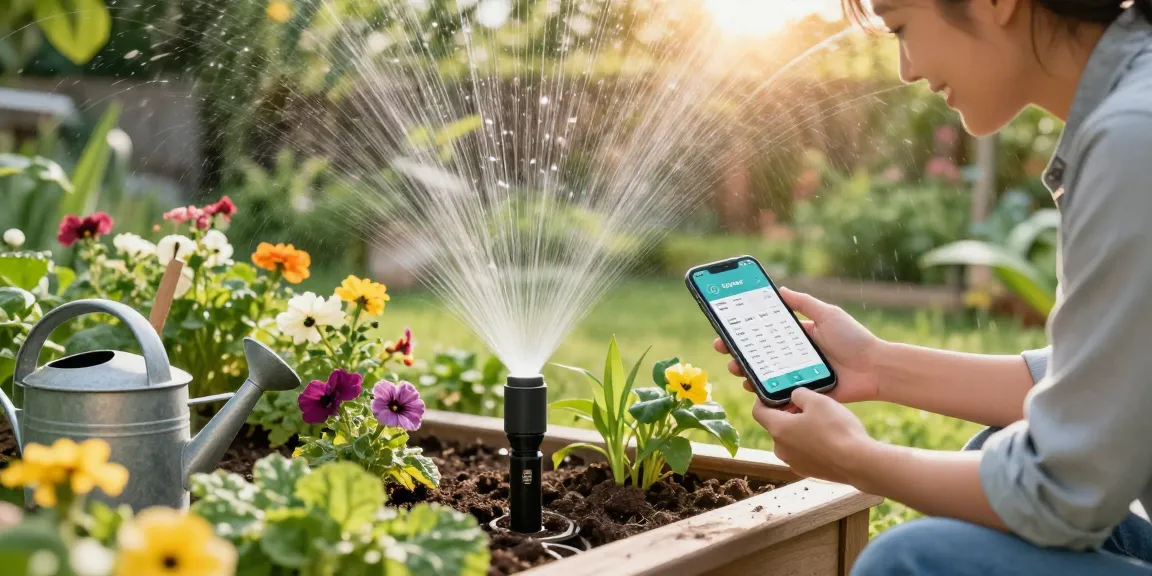
A WiFi timer from RainPoint can handle that schedule automatically, pause programs when heavy rain is forecast, and let you tweak individual zones without climbing onto a ladder.
Step-by-step: Drip irrigation for a vegetable bed
- Lay a main supply line from a spigot or the sprinkler manifold to the bed.
- Install a pressure regulator and filter to protect emitters.
- Run drip tubing along each planting row and punch emitter holes where plants are spaced.
- Flush lines, cap ends, and anchor tubing with stakes.
- Program the smart timer for shorter, more frequent cycles (e.g., 10–15 minutes twice daily), then monitor soil moisture and harvest health.
Example: In a 3-bed home garden, switching from daily 15-minute overhead watering to a drip system run twice for 12 minutes saved roughly 60–70% of irrigation water, according to homeowner logs and university extension comparisons.
4. Monitor, Adjust, and Measure Savings
Saving water is an ongoing process. Use measurements and simple tools to prove the savings and fine-tune your system.
Tools and metrics to track
- Water meter reads: Compare month-to-month and year-over-year usage for the same season.
- Soil moisture probe: Check root-zone moisture rather than relying on the clock.
- Controller run logs: Many smart timers keep a history you can export to see how much runtime changed.
Concrete example: After switching to a smart controller and drip conversion, one homeowner tracked a 2,400-gallon reduction in summer water use over three months, verified by meter readings. If you convert that to dollars using a municipal rate of $0.005 per gallon, that's about $12 saved — but multiply that across a season or with higher local rates and the payoff grows. For larger systems, the EPA notes that smart controllers have saved homeowners up to 15,000 gallons per year in some cases, depending on climate and prior practices (EPA WaterSense).
Yard typeRecommended setupTypical savings estimateSmall lawnMobile sprinklers + WiFi timer20–40%Large lawnSmart in-ground controller + low-flow rotors15–30%Vegetable gardenDrip irrigation kit with timer50–70%
If you want a quick next step after diagnosing your yard, read how a targeted solution can lower your monthly costs: RainPoint smart irrigation helps lower water bills. That page shows sample configurations and runtime calculators to estimate local savings.